Showing posts with label supplements for endurance athletes. Show all posts

Monday, 21 August 2017

Supplements for Endurance Athletes


Endurance athletics need a fine balance of both endurance and strength, which can only be achieved through years of dieting and training. Supplements are an integral part of this balance. But the products that are marketed to swimmers, runners and cyclists are a variety of sports drinks, gels and power bars which are easy to reach for on the go.

All these supplements fuel the body during grueling training times or during intense competition. However, most of these supplements for endurance athletes make sure the competitor goes through the competition and nothing more. Supplements play an important part in endurance sports. Here are some of the most potent endurance supplements to boost your game performance in a sport.

Protein

Protein is commonly associated with weightlifting and bodybuilding, thus it is very critical to performance during long hours of exercise. During an exercise or competition, the human body often starts to use protein to help meet the energy needs.

If the protein intake source is only from glucose, the body has to get protein from somewhere else. The body is such a monster! It always goes for the muscles. This process is called lean muscle tissue catabolism or muscle cannibalization. The process tears through your performance causing an increase in ammonia accumulation, which leads to fatigue and negatively affecting recovery time.

Beta Alanine

The amino acid beta alanine is such a good performance supplement to take in boosting your athletic performance. Research has shown that the supplement keeps fatigue at bay. This keeps you running strong for long period of time. Research also suggests that it can be used in improving the overall aerobic activity and promote lean body mass.

Creatine

Creatine is a supplement that is assumed to be an athlete weapon of choice. It is known for boosting muscle recovery and most of the endurance athletes often need help in this area than they realize. Supplementing the body with creatine can help in dealing with damages caused during training.

Creatine is also necessary for helping the body use its oxygen in a more efficient manner. It improves the sweat rate, heart rate and how the body distributes water. The supplement makes the body more efficient leading to a reduction in submaximal levels which boosts the body performance.

Iron

A previous research for a certain university showed that endurance athletes are more likely to suffer from anemia than the general population. This may be caused by the amount of iron the athletes lose when they sweat for several hours at a time. For an athlete to avoid anemia he/she must consume an iron rich diet. To some athlete, that’s never enough. They add iron supplements to their diet.

Iron is taken under the prescription of a doctor. Too much iron is poisonous to one's body. If you always feel fatigue despite the diet intake, it may be due to anemia been caused by iron deficiency. Iron supplements are a great boost to your body performance keeping you from setbacks like anemia.

Supplements can never replace talent and hard work, but the supplements can help endurance athletes reach the finish line with fewer injuries and more energy.

Source : Click Here

Tuesday, 9 May 2017

Tips for Muscle Recovery

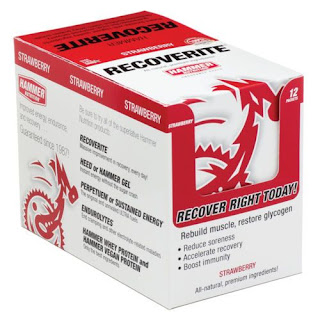
One of the best ways to recover your muscles after exercise is by taking recovery supplements for athletes. There are many different recovery supplements for athletes found at Hammer Nutrition.

recovery supplements for athletes


Your Muscles Must Recover


It is great to spend a lot of time working out and lifting weights but between these workouts, you also have to take some time off to allow your muscles to recover. If you do not do this, you are not going to max the strength-building goals you have been working for. Recovery does not necessarily mean you have to sit in front of your television and eat a bunch of junk food. What you do on your off-days is just as important as what you do while you are in the gym.

Promote Circulation by Working Joints


Even on your days off, you need to stay nimble. You can do this by moving your arms, wrists and knees in low-intensity circles. The opening and closing of your joints is going to bring fresh synovial fluids to nourish, lubricate and hydrate your joints. You need to rotate clockwise and counterclockwise to prevent imbalances and overuse injuries. You must use caution and not hyper extend and keep circles tight to in order to prevent excessive lateral motion so you do not torque your joints.

Use Foam Roller to Reduce Muscle Tension


If you feel muscle tension after a workout, you need to use a long, semi-soft foam tube to give your muscles a good massage. Foam rolling will break up scar tissue and knotting in your fascia (which could lead to aches and pains in your joints). As soon as you wake up, before bed and any spare times during the day, you should spend at least 30 to 60 seconds rolling your sore muscle groups.

Substitute High-Intensity Exercises with Isometrics


On rest days, you need to trade in your high-power weight lifting exercises for Isometrics. In order to do this, you need to hold a certain position for a longer period of time. Your muscles are going to be engaged but at a lower intensity. This will allow blood and nutrients to rebuild in your body for your next high-energy training session.

Overhead Squat to Increase Mobility


The overhead squat is the king of mobility exercises. If you are able to master the overhead squat, it will improve your workouts. It will strengthen your joints so you will be able to bear more weight while you are working out and it will also promote blood flow to battle soreness. To do the overhead squat you need to:
  • Have your hands and feet shoulder-width apart and grab a resistance band at the ends
  • Extend your arms straight overhead and keep your shoulders down and back
  • Push your hips back and squat down on your heels until your hamstrings rest on your calves
  • Hold for five seconds, then push your knees out and stand up fast
  • Perform 5 to 10 reps three times each day to mobilize the tightest areas of your body

Source: Click Here
.

Friday, 31 March 2017

How Safe are Endurance Supplements?


If you are looking for supplements for endurance athletes, you need to look at the athletic supplement online retailer, Hammer Nutrition Europe. The following article gives you some good information on how safe these supplements are for you body.

supplements for endurance athletes

There are some supplements for endurance athletes that can benefit an athlete no matter what age you are currently at. If you are taking any type of endurance supplement, it is very important that no matter what age you are at, to make sure that the supplements are only taken according to the manufacturers’ recommendations. Supplements can benefit athletes that are on a poor or weight-reducing diet who may not be getting enough vitamins and/or minerals through their diet – these supplements will make sure you get the proper amount of vitamins and minerals that your body is craving is so disparately needs. You must make sure that you do not too large of a dose of vitamins and minerals because if you do take too much of a large dose of these vitamins and minerals, it can be toxic to your body. Iron deficiency is pretty common for endurance athletes, particularly for females that are menstruating. If you are iron deficit, it can greatly affect your performance by reducing the oxygen carrying capacity of your blood. On the other hand, too large of doses of iron can create imbalances in other minerals such as copper because of how high iron intakes inhibit copper absorption in the gut. High levels of iron can also increase your risk of cardiovascular disease – which can be a very serious problem.

Creatine has been shown to benefit repeated sprint-performance in sports such as team sports where sprints are interspersed with rest or recovery periods of low intensity such as soccer, basketball or hockey. Athletes are recommended to load with 20 to 25 grams each day over a period of five days. Then the athletes need to maintain one to two grams per day in order to maximize the benefits that they receive. While not often taken in larger doses, in those people susceptible to kidney problems, the loading phase and regular use may be not recommended, so care definitely needs to be taken if you have any kind of kidney problems.

Your kidney function may also be reduced in athletes that are taking more than 2.8 grams per kilogram of body weight per day of protein. It is therefore recommended that the protein dosages of supplements for endurance athletes be between 0.8 to 1.6 grams per kilogram of body weight per day with possible larger doses of 2.0 grams per kilogram of body weight per day for high level endurance athletes that want to put on muscle mass through all of their different weight training that they are completely on a daily or weekly basis.

Caffeine has been shown to legally enhance endurance performance with minimal side effects when used in dosages of 3 to 6 milligrams per body weight. A higher dosage of caffeine is very well likely to result in nausea, dizziness, gut upsets and insomnia. Supplements for endurance athletes are safe but you must make sure you are not taking too much and only take what is recommended by the manufacturer.

Source: Click Here

Monday, 12 September 2016

How to Best Recover from Long Workouts

If you have long workouts, you need to look into recovery supplements for athletes. Hammer Nutrition has all of the recovery supplements you need to help your body recover from a long workout. Besides taking supplements, there are things that you can do yourself for your body to help it recover some on its own.

recovery supplements for athletes 
Schedule Recovery Weeks
It is important to remember that you break your body down when you train. Long workouts are going to deplete your energy, muscles and other tissues. Your body must have time to rest. If you do not have proper recovery time, it can lead to overtraining. Exhaustion is going to set in if you are not careful. If you are fatigued, you must address it or it can lead to physiological and chemical changes in your body, such as extreme fatigue, inflammation, missed lifts and workouts that are not good. It is best to schedule a recovery week every 4 weeks. 

Schedule Recovery Time between Workouts
Muscle sorenessis common after weight lifting. Many athletes base their success of their training sessions on how sore they get but this is not good. You should make sure you have 2 to 3 days of rest between your intense training sessions that involve the same musculature. If you complete sub-maximal training sessions, less rest will be required.

Get Enough Sleep
Just like everything else with your heath, your body needs to get the proper amount of sleep in order to work correctly. Lack of adequate sleep can decrease your tolerance to training, alter your mood, increase fatigue and negatively affect the physiological mechanisms responsible for your training sessions. You should come up with and stick to a regular sleeping routine where you go to bed at the same time each night of the week. You should try to remove any distractions such as, light, smart phones and television viewing. Eight hours of sleep per night and a 30-minute power nap is enough to rejuvenate your body.

Hydrate
The minimum amount of fluid intake per day for males is 3.7L/day and 2.7L/day for females. You should always make sure to take in the minimum amounts of fluids daily. If you are sweating a lot, you are losing even more water that your body needs. For every 1,000 calories you burn, you need to drink 1 liter of water. 

Get Your Nutrients
Proper nutrition is essential for recovery. Depending on how much you train during the week, protein recommendations can range from 1.0 to 1.6 grams per kilogram of your body weight daily. Eating carbohydrates is a must for refueling your body’s glycogen stores. You should always eat a post workout snack that contains roughly 50 grams of carbohydrates and 30 grams of protein. A well-balanced meal should be consumed roughly 2 hours after your workout to continue your body recovery process.

Conclusion
There are many things you can do to make sure your body recovers after a long workout. Besides doing the tips above, there are many recovery supplements for athletes that can be purchased from Hammer Nutrition that help your body recover even more.

Source: Click Here.

Thursday, 1 September 2016

Exercises That Burn More Calories than Running Alone

If you are looking for supplements for endurance athletes, you need to look no further than Hammer Nutrition. Endurance athletes work hard and sometimes they need just that extra supplement to keep them going even further.
supplements for endurance athletes

Running
Running allows you to get a stress-reducing, endurance-boosting workout with just a pair of tennis shoes and an open road but sometimes you need workouts that are going to burn more calories than running alone can and will do.

Weight Training
You burn more calories by doing high-intensity weight training than you do running. In fact, weight training burns up to 71% more calories than originally thought. Fast-paced circuit workouts burn as many calories as running at a six-minute per mile pace. There are also cardio exercises that can boost your burn as well. 

Kettlebell Swing
This cardio exercise works the big, powerful muscles around your glutes and quads. It will send your heart into overdrive. The average person can burn20 calories a minute and their average heart will be 93% of its max for the course of a 20-minute workout.

Indoor Rowing
A 185-pound man can burn close to 400 calories during 30 minutes of vigorous rowing. Since you need to utilize the muscles in your arms, legs and back for efficient strokes, rowing is a great total-body workout. 

Burpees
A 180-pound person can burn about 1.5 calories per burpee. If are able to hammer out at least seven burpees a minute, you are in the double digits for calorie burning. You should shoot to average at least 10 burpees every 60 seconds.

Jumping Rope
Moderate-intensity rope jumping with about 120 skips per minute is going to burns about 15 calories a minute. This exercise is going to use more muscle groups than jogging and is going to challenge your balance and coordination. For even better balance and coordination skills, you should practice drills that require extra hand and foot skills.

Fat-Tire Biking
You can burn up to 1,500 calories an hour by pedaling the heavy, hard-to-turn monster bikes and tackling all types of terrain. That kind of calorie burn will depend on your strength levels and skill but it will give you one heck of a cardio workout no matter what.

Cross-Country Skiing
Zipping along on skis is going to deliver a better cardio workout compared to running alone, even at the same pace. This is because skiing requires you to push with your lower-body and pull with your upper body. A good cross-country ski session will burn more than 12 calories a minute.

Conclusion
There are a wide variety of different cardio exercises you can complete to help you burn more calories than running alone is going to give you. If you need more help than exercise alone is giving you, you can try some taking some supplements for endurance athletes that can specially be found from Hammer Nutrition. No matter what, if you want to burn more calories, you need to keep moving.

Source: Click Here.